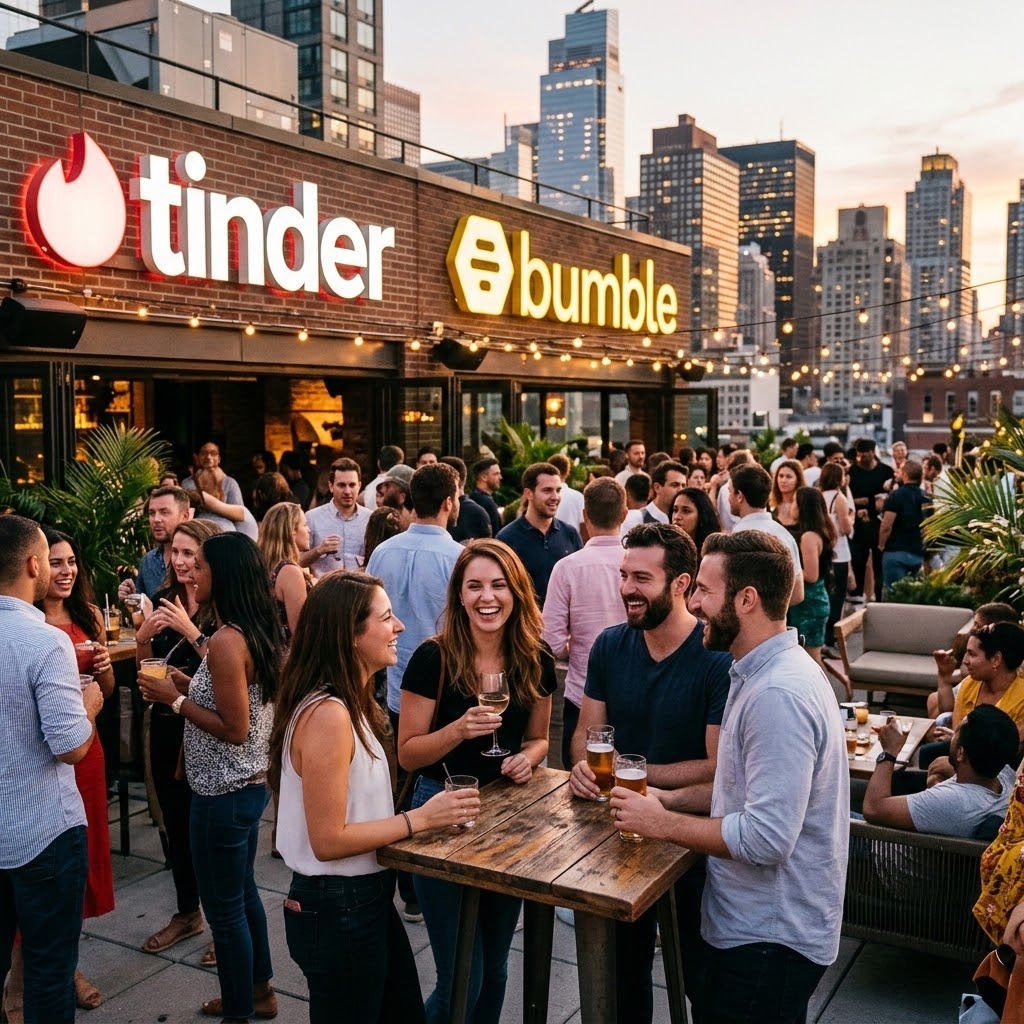
For more than a decade, the dating app industry was built around a simple promise: find love with a swipe.
The formula was remarkably successful. Millions of singles downloaded apps, created profiles, and began connecting with people they would never have met otherwise. Swiping became a cultural phenomenon, transforming dating into something that could happen anytime, anywhere.
Yet in recent years, something unexpected has happened.
Many of the industry’s biggest players have begun investing in features that look surprisingly similar to traditional dating. Real-world events. Group meetups. Matchmaking by friends. Speed dating. Video interactions. Community experiences.
The question is obvious:
If swiping was so successful, why are dating apps trying to move beyond it?
More importantly, does this shift signal the end of the swipe-based dating model, or is it simply a temporary hurdle that the industry will overcome?
The Swipe Revolution
When swipe-based dating apps first appeared, they solved a genuine problem.
Meeting new people was difficult.
Technology suddenly provided access to thousands of potential matches within minutes. The efficiency was unprecedented.
The model worked because it reduced friction:
- Quick profile creation
- Instant discovery
- Immediate feedback
- Endless opportunities
For years, growth seemed unstoppable.
The more users joined, the more valuable the platforms became.
But every successful model eventually encounters its limitations.
The Rise of Swipe Fatigue
Today’s users face a different problem than the first generation of dating app users.
The issue is no longer access.
It is overload.
Many singles report feeling exhausted by endless swiping, repetitive conversations, and disappointing outcomes. They accumulate matches but struggle to form meaningful connections.
What was once exciting can begin to feel repetitive.
Instead of creating anticipation, each new swipe often feels identical to the previous one.
This phenomenon has become known as swipe fatigue.
The challenge for dating platforms is that fatigue directly affects engagement. Users who feel burned out spend less time on apps, respond less frequently, and are more likely to leave altogether.
Why Apps Are Moving Toward Real-World Experiences
The industry’s response has been revealing.
Rather than simply improving the swipe experience, many companies are introducing features designed to bring users closer to real human interaction.
Group dating features reduce pressure.
Friend-assisted matchmaking adds social trust.
Speed dating introduces urgency and spontaneity.
Events create opportunities for face-to-face chemistry.
Video interactions help users move beyond carefully curated photos.
In other words, many platforms are attempting to solve a problem that swiping alone cannot.
Chemistry.
The Trust Crisis
Another factor driving this shift is declining trust.
Users increasingly worry about:
- Fake profiles
- Catfishing
- AI-generated photos
The more uncertainty exists, the harder it becomes for users to invest emotionally in the process.
A real-world event immediately confirms authenticity.
A video conversation reveals far more than a profile photo.
A recommendation from a friend carries more weight than an algorithmic suggestion.
Many of the industry’s newest features are not simply about engagement. They are about rebuilding trust.
Is the Swipe Model Dying?
Despite these changes, it would be premature to declare the death of swiping.
Swiping remains an efficient discovery mechanism.
Users still appreciate the ability to browse potential matches quickly.
Dating apps continue to facilitate millions of successful introductions every year.
The problem is not the swipe itself.
The problem is treating the swipe as the entire experience.
For years, many platforms optimized for matching rather than connecting.
A match became the goal.
But users never wanted matches.
They wanted relationships.
The distinction matters.
The Evolution of Dating Platforms
History suggests that industries rarely abandon successful models entirely.
Instead, they evolve them.
Social media did not eliminate text posts when photos became popular.
Streaming did not eliminate traditional television overnight.
Similarly, in-person features are unlikely to replace digital discovery completely.
More likely, the industry is entering a hybrid phase.
Users will discover each other online.
They will verify authenticity more quickly.
They will move into richer forms of interaction sooner.
And they will spend less time trapped in endless text conversations.
The swipe may remain, but it will no longer be the center of the experience.
What This Means for the Future
The most successful dating platforms of the next decade may not be the ones with the most profiles.
They may be the ones that create the fastest path to genuine human connection.
That could mean:
- More video interactions
- More real-world events
The industry’s recent pivot suggests a growing realization that technology alone cannot create chemistry.
It can only facilitate it.